
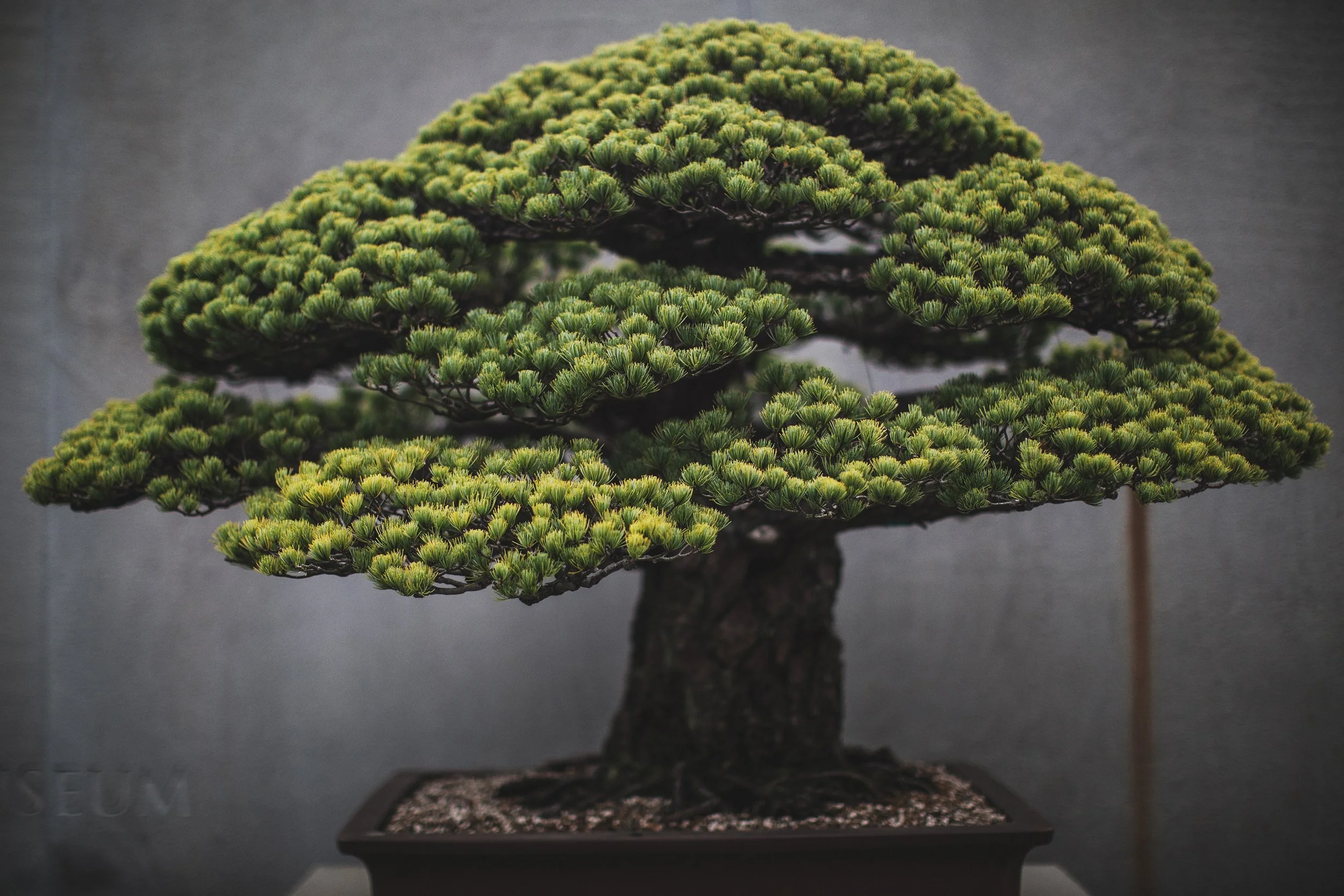
“Don’t make the tree a bonsai.
Make the bonsai a tree.”
Welcome to this bonsai sharing community.
This wasn’t supposed to happen.
I dipped a toe in — curious, casual, no big commitment — and now it’s all I think about. If you’ve found your way here, there’s a decent chance you know exactly what I’m talking about.
Bonsai Diaries is a personal notebook of my bonsai journey: the trees I’m growing, the mistakes I’m making, the slow and humbling process of learning an art that doesn’t reward impatience. That’s all. But it could become something bigger. The more I see/read/experience in my bonsai pursuits, the more I’m hearing the same story from so many other places.
Someone picks up a tree. They’re not sure why. And then something shifts.
I’m fascinated by that shift. By the psychological pull of this art — why it hits so hard, why it spreads, why people who find bonsai tend to fall all the way in. The presence it demands. The losses. The tiny victories. The way it quietly recalibrates what you thought mattered.
Bonsai is having a moment — it’s surging in popularity in a way that feels like more than a trend. I think it’s meeting a quiet hunger: to slow down, to get small, to tend something living that pulls you out of your head and into your hands.
Renowned Japanese bonsai master Saburo Kato (1919–2008) put it perfectly: “A heart that loves bonsai builds peace.” It sounds almost impossibly simple until you’ve felt what this practice does to you.
• • •
As this diary grows, you will notice my trees don’t follow the traditional script. My collection spans caudiciform, conifer, deciduous, succulent, and tropical — and a lot of unconventional choices by purist standards. That’s intentional. The trees on my benches will continue to surprise me. We won’t be bound by ancient dogma.
My (borrowed from Van Morrison) “no guru, no method, no teacher” code isn’t just a mantra — it will show up in the trees themselves. If a plant speaks to me, if it has character and potential and something worth developing, if it takes an unexpected turn … that’s enough.
This is an unapologetically amateur practice, based in New England, with dirty hands and an open mind. No expertise claimed here. Just an open diary, and a genuine curiosity about what this art does to the people it finds — and me.
If it has found you too — I’d love to hear your story.
Top: The Yamaki Pine, a/k/a the “Peace Tree,” at the Japanese Pavilion of the US National Arboretum's National Bonsai & Penjing Museum. Believed to have been planted around 1625, it miraculously survived the 1945 atomic bomb blast while at the Yamaki family nursery in Hiroshima, Japan.