‘Little Boy’ Green
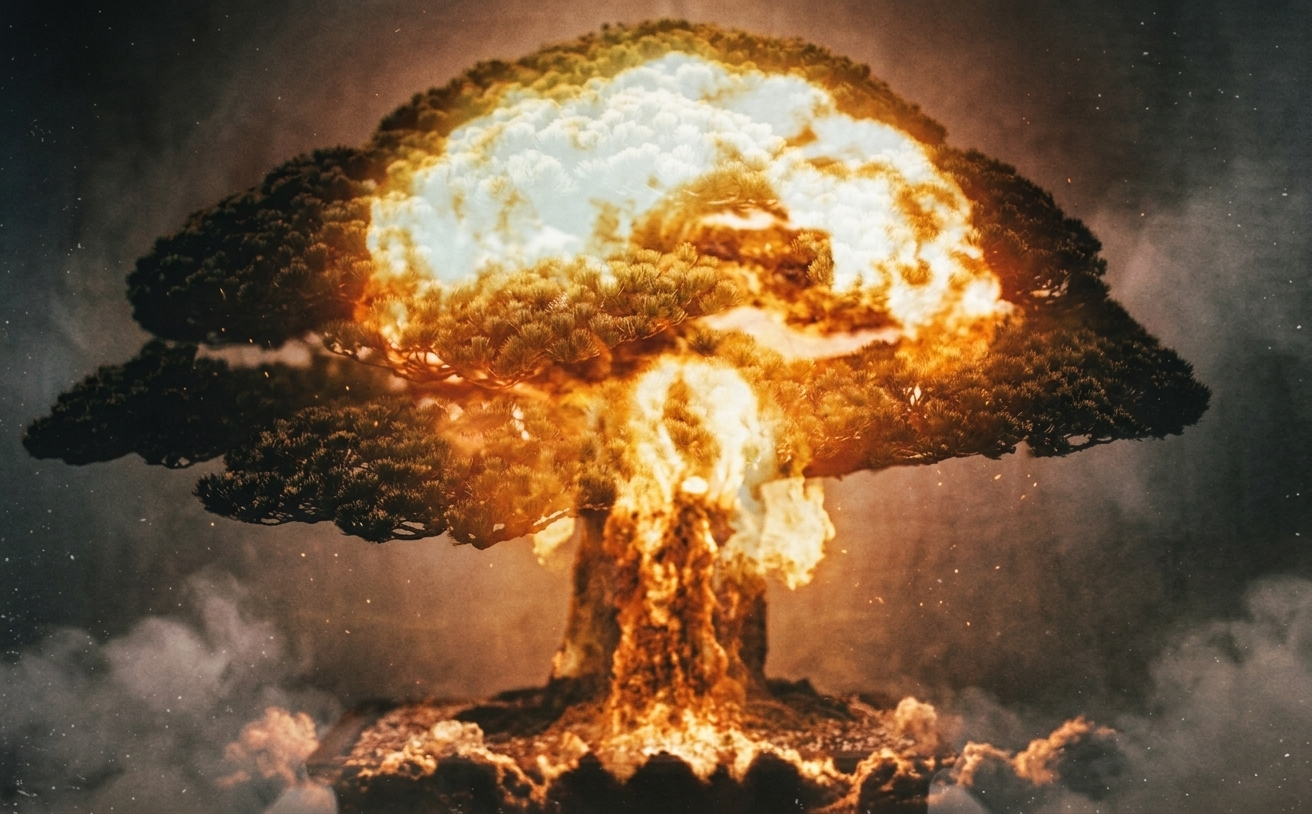
There is a white pine at the United States National Arboretum in Washington, DC that is more than 390 years old.
It stands about four feet tall. It was shaped, patiently, by the same family for generations.
In August of 1945, it was growing in a garden in Hiroshima, Japan.
The atomic bomb the United States dropped that morning had a name: ‘Little Boy.’ Another, dropped three days later on Nagasaki, was called ‘Fat Man.’ Military men, it turns out, name things the way we name hurricanes — casually, almost cheerfully, as if the scale of destruction might be easier to manage with a friendly handle on it.
The tree survived.
•••
They call it the ‘Yamaki Pine,’ named for the family who tended it. Masaru Yamaki, a bonsai master, lived with his family less than two miles from ground zero of the blast. The windows of their home shattered. The city was destroyed. Tens of thousands died. And yet somehow this tree — sheltered, perhaps, by a garden wall — stood.
Thirty-one years later, in 1976 as part of the American Bicentennial, the Yamaki family donated that pine to the United States as a gift of friendship. Friendship offered to the country that had dropped the bomb. That is the kind of grace that doesn’t fit neatly into words. The tree crossed the ocean. It took up residence at the arboretum. Decades passed.
But here is the part that stays with me.
For twenty-five years, no one at the arboretum knew the tree was a Hiroshima survivor. That piece of history had simply not traveled with it. Then, in 2001, two of Masaru Yamaki’s grandchildren showed up at the arboretum gates. They wanted to see their grandfather’s tree. In that visit, the story finally caught up to the tree that had been quietly living it all along.
The pine did not know it had been lost. It just kept growing.
I saw the Yamaki Pine in person last February. The arboretum was buried under a foot of snow, temperatures way below freezing. I was, as far as I could tell, the only person there. The museum was silent. The pine stood exactly as it always has — unhurried, unbothered, present, fearing nothing.
•••
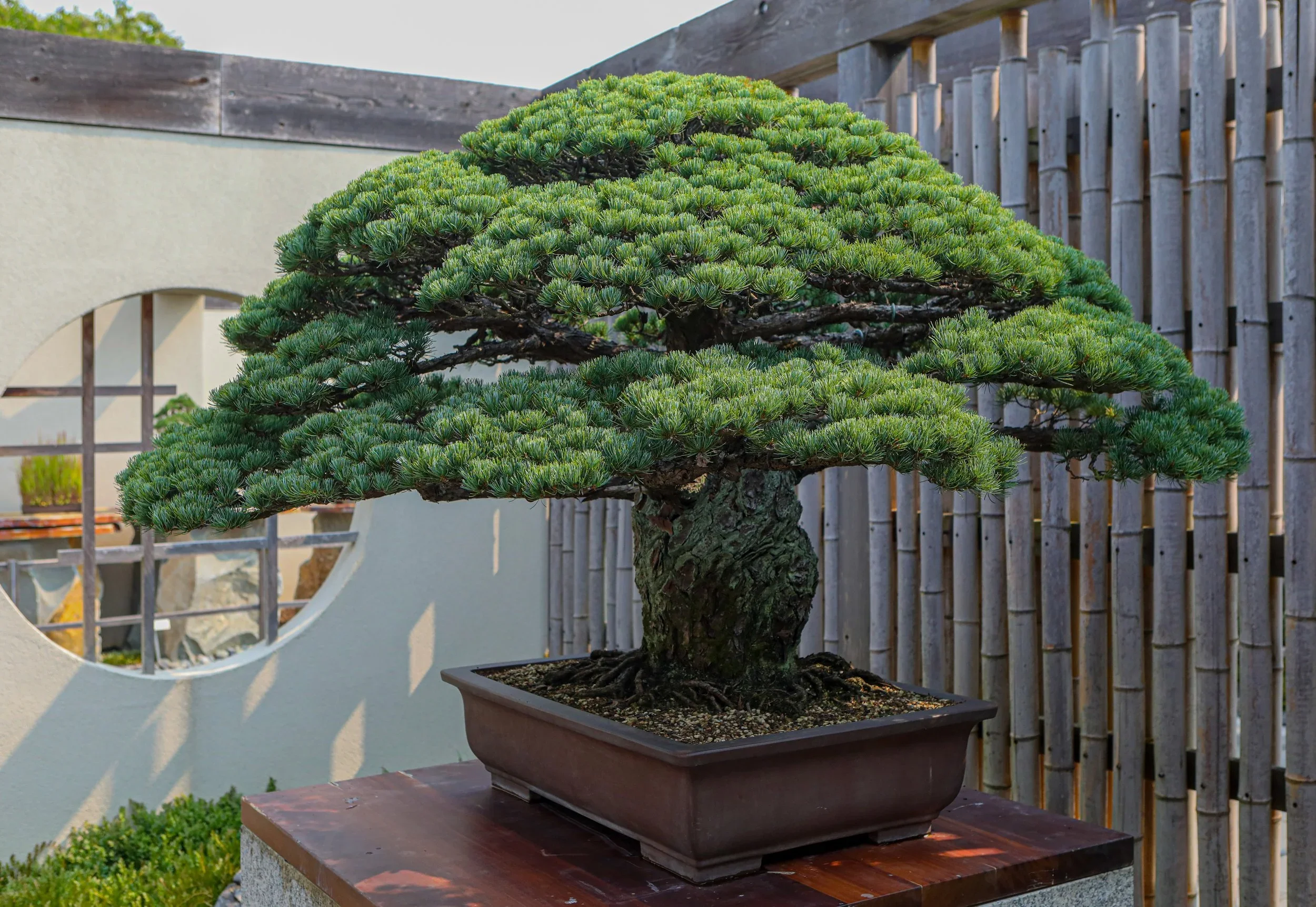
I’ve thought about it a lot since that trip. The tree has survived an atomic blast, an ocean crossing, and twenty-five years of anonymity. A frigid Tuesday in February was nothing to this pine. But there’s something to be said for showing up anyway — for being the person standing in the snow in front of something that has earned your attention. The tree doesn’t need the witness. But maybe the witness needs the tree.
This blog will return again and again to a single idea: bonsai is time. Not a metaphor, exactly. More of a fact. These trees are not decorative objects — they are time made tangible. Compressed, shaped, scarred. The days, months, years all laid bare.
The Yamaki Pine holds within its trunk the years before the bomb, the moment of the bomb, and every quiet year since. It holds Masaru Yamaki’s hands. It holds the patience of people who tended something small because they believed it mattered.
That’s what I am doing here. Looking closely at my own small trees, putting in the time — and taking the long view.
The Yamaki Pine is on permanent display at the National Bonsai & Penjing Museum at the US National Arboretum in Washington, DC. It is free to visit. It is worth the trip. And while you’re there, head across the Potomac to Vienna, Virginia and visit Wolf Trap Nursery. They’ve got a surprising little bonsai selection and tons of pots. I bought a Green Island Ficus, an Orange Jasmine, and a Japanese Maple there and carried them home on the Acela. If you’re short on time, visit Ginkgo Gardens instead, in the Capitol Hill neighborhood. They’ve got a nice collection there, too. (I nabbed a Pachypodium lamerei).